
My Second Attempt at Solitude - Part 2: Validation
The PBA framework is effective to tackle Overwhelm and Anxiety.

When I made My First Attempt at Solitude, I was barely a functional human. Overwhelm and anxiety took over what should have been a restful retreat at a cabin in the woods.
After many months developing the PBA Framework and travelling the road From War to Writing, I am pleased to report my second attempt at solitude was far more successful.
The PBA Framework works.
Last week’s Part 1 article detailed my plan for my Second Attempt at Solitude.
Today’s Part 2 article discusses what I learned on that retreat and why I see this as validation that the PBA Framework is effective.
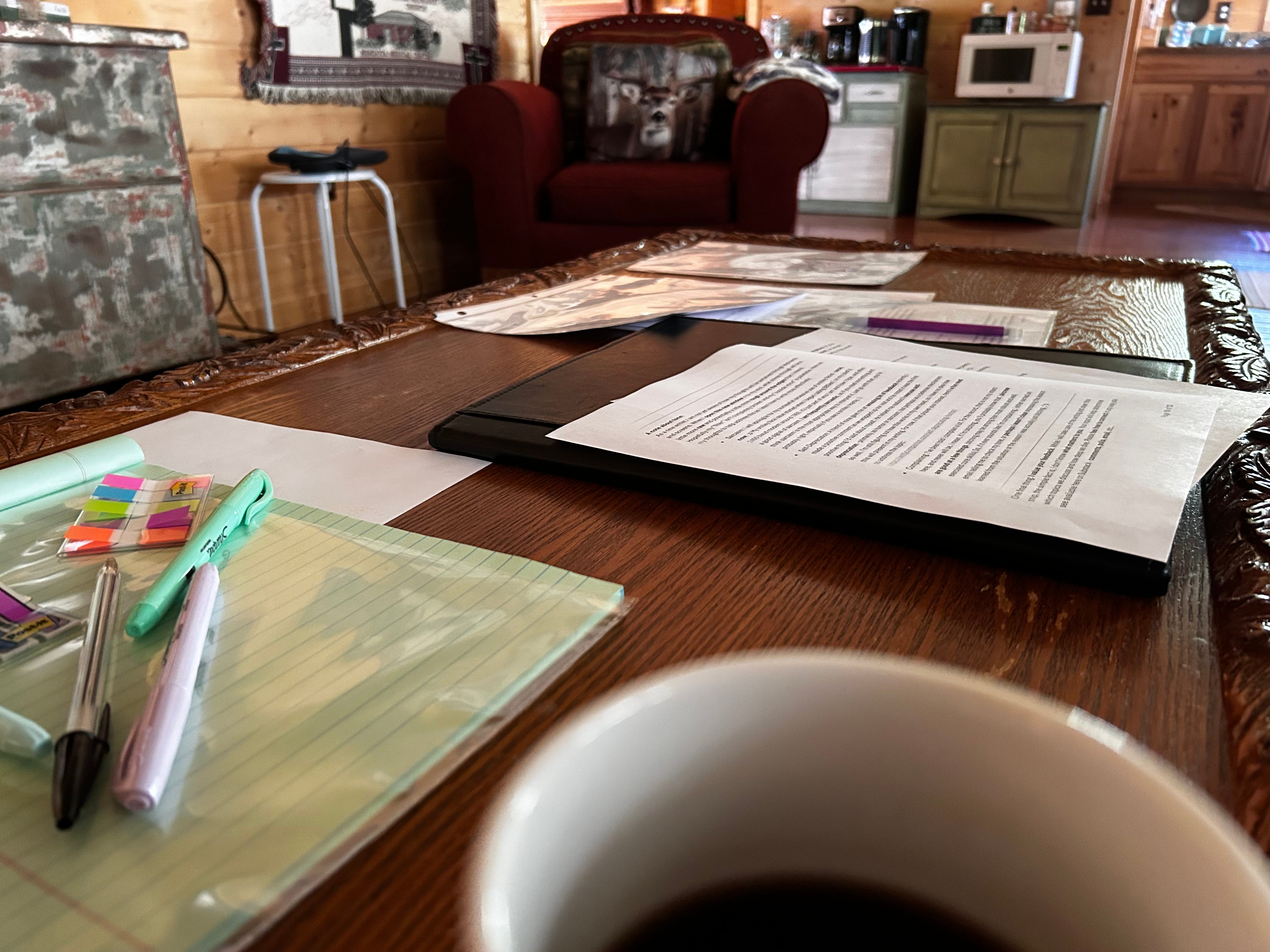
This retreat was different. I was unprepared for the challenges I faced on my first attempt at solitude. This time, I was ready.
This time around, I felt somewhat separate from the chaos. Rather than engulfed in it or entangled at the edge and bound from escaping, I was more like an observer or director. The chaos was still there, but it was far more manageable and occasionally faded to the background.
The best analogy I found is like my baseline anxiety level finally dialed back down to something in the realm of sanity. I could notice and feel things that would typically upset me but not get overwhelmed by them. That was tangible progress. That goal would have been out-of-reach just a few short months ago.
If you’re curious what that looked like, or how you might incorporate the PBA Framework to tackle your own goals, continue on, dear reader. :)

Validation, Quick Ideas, a Moonshot, a Dive-Bomb, and Contentment
This trip was incredibly validating. It proved the PBA Framework is effective.
Compared to my First Attempt at Solitude, this retreat had an entirely different mental tenor or tone… it felt different. On my first trip, overwhelm and anxiety were so pervasive they combined to generate a baseline mental stress level that resembled panic… even at a cabin in the woods. This time, the baseline was much, much lower. Panic didn’t set in. Chaos didn’t overwhelm, and I actually fully relaxed and let my guard down for the first time in quite a while.
I was even able to invest time on some ‘proper’ daydreaming. :)1
On the first night, I focused solely on settling in. After everything was unpacked and my work was laid out, it was time to relax. I didn’t manage to fully unwind that first night, but I got settled in well.
Most importantly, the previous feelings of overwhelm and anxiety stayed away. On the first night, they didn’t show up at all.
The first full day was quite pleasantly peaceful. With my phone silenced and my tablet left at home, my train of thought derailed far less than usual. That also helped stave off the pervasive feeling of having ‘too much’ or ‘something urgent’ to do. By the first cup of coffee my mind was racing with ideas for my work, rather than staggering under the weight of the day. I took a flurry of notes, started my article reviews, and felt both productive and relaxed before noon. That was a weird combo.
That was also the day Artemis II flew behind the moon. I spent many hours simply relaxing and watching human explorers make history. I’ve always been fascinated with space. Finally seeing that mission take place was enthralling. Watching a live feed of humans flying behind the moon was spellbinding.
Trying to ‘work’ with that in the background simply wasn’t going to happen. When it felt like I should be getting more done, I reminded myself that resting was the primary goal. That ‘simple’ little trick would not have worked a year ago. Practice setting priorities, managing boundaries, and seeking alignment helped. :)
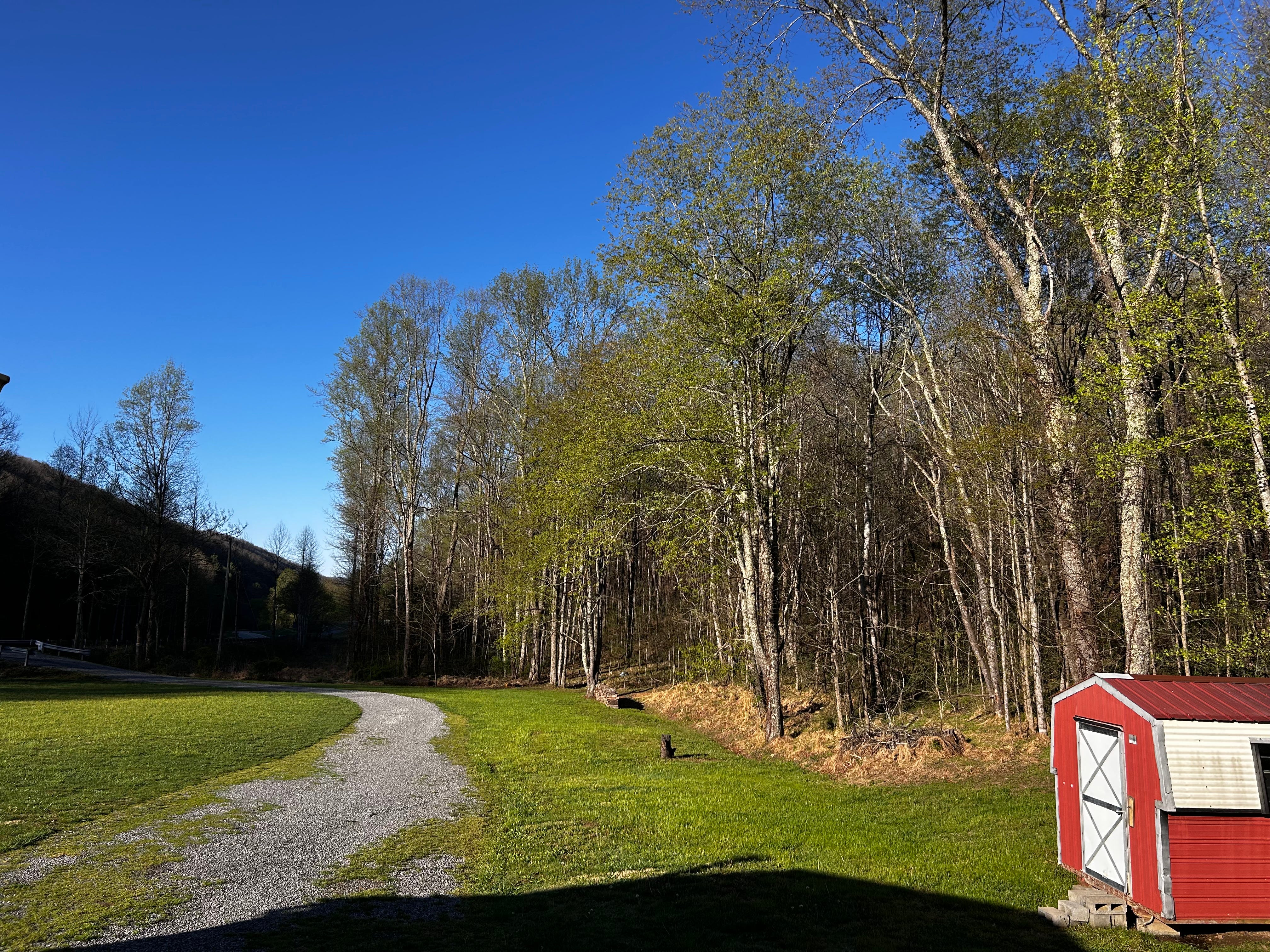
When a low flying aircraft buzzed the cabin, a large semi barreled down the highway through my little valley, or a very large bug/crazy bird/something-flying tried to take me out with a drone-like dive-bomb on the front porch, those anxiety spikes were momentary. On my first attempt at solitude, those types of ‘triggers’ derailed me for hours.
This is tangible. This is progress. This is healing. This is hope.
The second day started much like the first. Positive thoughts and ideas raced to the front of my mind. I was on a roll and ‘productive’ with my first cup of coffee. Rather than feeling crushed by the weight of the impending day, I was able to actually embrace the freedom of the carefully crafted environment.
I also more starkly realized that relaxing was actually working and decided to lean into that more fully. Even when guilt or something crept in telling me I should read more or make more notes, remembering rest was my #1 priority, and was an aligned choice, allowed me to relax with more freedom and comfort. I even managed to relax enough to watch a couple movies. :)
The third day was just packing up and going home, but it deserves a mention here too. It felt different. Not ‘complete,’ but ‘successful’ in some way. The typical sense of unease or anxiety so familiar when leaving a vacation or a restful place was instead one of contentment. I accomplished what I set out to do, even if the main goal was ‘simply’ to relax. That’s a big win.

Goal Report
Last week, in part 1 of this article, I spelled out three goals. I accomplished enough of each to consider them all a success, even though a couple didn’t go quite how I planned. :)
Primary: Relax - Accomplished, and better than I expected. The PBA Framework allowed me to tackle this primary goal quite effectively.
While individual aspects of the PBA Framework proved effective to this end, repetition of the whole framework made success possible. Priorities, Boundaries, and Alignment may be separate concepts, but they work together to form a synergy that compounds over time. Considering these ideas when planning my retreat helped set the stage for a relaxing escape. Applying them in-the-moment let me stay relaxed, helped weather the short storms of surprise triggers, and allowed me the grace to ‘forgive myself’ for not being as ‘productive’ as I’d hoped.
I actually relaxed… more than I have in a very long time. That was Priority #1. That’s a win. It is important to acknowledge and celebrate little victories along healing journeys.
Secondary: Read my published work - Started. Goal evolved.
The secondary and bonus goals were admittedly a bit aggressive. I wasn’t sure I’d be able to relax, but figured if I did, I’d still have pent-up energy to direct somewhere. Being able to actually relax was quite nice… go figure! Unsurprisingly, I chose to lean into the first priority once I realized it was working. That caused this goal to evolve.
When I prepped for this trip, it took me several days (and about 12 hours) of focused effort to print everything I’ve published. I thought I would be able to read “most or all” of my work on this short retreat.
I don’t know why I thought I would read faster than I print.
Even with a quick, casual read — without aiming for deep-thinking, pattern recognition, or emotional moments — I still couldn’t read that fast.
Simple math could have told me there was no way I could read everything I’ve published in two days, especially if that wasn’t the primary goal. It’s funny how often complicated things seem easy to me, but simple things like basic math often escape me.
So, this goal evolved. After re-reading only a fraction of my published work, it is clear there is value in that process. I don’t know what that type of review will look like or when it will happen, but for now, it goes to the back burner.
Bonus: Annotate - Foundation Laid - I severely underestimated the time and mental energy this is going to take. As if the simple math above wasn’t clear enough, I also forgot to account for time to reflect, connect larger ideas, and actually mark them appropriately.
I laid a foundation on this retreat by identifying which themes need to be captured and designing a system to do so. My neatly arranged highlighter and colored flag scheme is fun to use and likely effective, but employing it is tedious and time-consuming.
I started with my first missive. I had not read any a part of it in about a year. My memory of that first article was not what I encountered this time around. Though a bit rough and rambling, it is more coherent and contains more value than I remembered. It was also surprisingly in-line with what my work here is becoming. Among other surprises, I found much foreshadowing of the PBA themes I didn’t realize I wrote at the time.
That review of my first article showed me two big things:
1) There is value in reviewing my old work.
2) Properly annotating it will take time and focused effort.
Bottom line: There is more untapped potential in my previous writing than I thought. How, when, or if I’ll get through it for a proper review, is TBD.

Specific Tie-Ins to the PBA Framework
This article wouldn’t be complete without making some direct connections to the PBA Framework.
In general, the framework proved its overall worth is primarily based on repetition. Internalizing the PBA concepts over time made the system function effectively as a whole. Still, there were a few specific points that link directly back to individual concepts that helped make this retreat a success.
Priorities: No pushing. The primary goal was to rest, not work.
In solitude, with far less external pressure and nearly zero external expectations on my focus and attention, it would have been easy to become my own worst enemy and try to ‘work’ too hard. It was important to keep my priorities in mind and remember that resting was my primary goal.
Deliberately setting rest as a priority before I left gave me ‘permission’ to relax when I felt like I should be working. When guilt snuck in saying it was time to accomplish more writing review, I could rest easier knowing my priorities were in order.
The urge to “push though” and “just do it” was manageable with clear (and aligned) priorities.
Boundaries - Reduced digital distractions. I left my tablet at home and muted my phone.
My tablet is weak spot for me when it comes to getting distracted. It is one of my biggest culprits of attention theft. Not so much because of notifications, but that’s the device that tends to ‘pull me in’ and lead to predictable lost time.
I chose to leave it at home, so it wasn’t a tempting distraction. TBH, I didn’t even miss it. That was a healthy boundary.
After much debate, I did bring my phone, but I left it in silent mode during the retreat. Leaving it at home seemed like it would commit me to a ‘digital detox,’ and that wasn’t a goal. My phone doesn’t tend to ‘pull me in’ like my tablet, so muting the notifications and keeping it in the kitchen drew a solid enough boundary to reduce its ability to hinder my relaxation efforts.
Those two boundaries allowed me to meet my primary goal.
Alignment - Resting as the #1 priority was aligned.
For most of my life I’ve often felt guilty when I relax... or simply unable to do so. This week, I managed to relax more than I have in a very long time. On the road From War to Writing, that’s a huge win.
Of all the factors that allowed me to finally relax this week, alignment seems most key.
My trip was solidly aligned with my goals, desires, means, family, home responsibilities, etc… My priorities were aligned with my needs, capabilities, and vision of my work here. My boundaries helped align my focus and attention with my goals.
On my first attempt at solitude, many of those factors were out of alignment, or not even in the picture.
Bottom line: Every time a worry from somewhere else popped up, I was able to successfully handle it quickly with one of those three techniques.
The PBA Framework works.

Wrap
At the end of the day, this trip was a resounding success. It proved the PBA Framework is effective, and perhaps in some ways even more so than I thought.
Actually relaxing, fully, and for the first time in quite a while, was a major win.
As we go forward here, I hope to give you more tools to achieve similar victories.
I look forward to refining the PBA Framework and seeing what we develop and which situations we learn to tackle.
If you have questions about the framework, or this retreat, I invite you to leave a comment below or simply reply to this email.
If you would like to follow this journey and learn more about the PBA Framework, I invite you to consider subscribing to get my thoughts every week, direct to your inbox.
Until next Saturday, I wish you a pleasant week.
Yours, from war to writing,
- Terry 8^)

Related Articles
Prologue: My First Attempt at Solitude

In my first book, “From War to Writing,” I will tell my story. A story of healing and recovery, of climbing out of the hole of a downward mental spiral of overwhelm, stress, and despair. After my 24-year military career I found myself drowning, but I learned how to swim.
My Second Attempt at Solitude - Part 1: The Prep

When I first explored Substack, I had a flash of a vision… of what I could possibly build here. It was big, wild, and rather scary. I chose to set it aside as unrealistic and yet another example of what I would come to recognize as overexcitability.
This article was written 100% ‘by hand’ with zero AI assistance. My AI Policy, Perspective, and Practice
“Proper Daydreaming” - Allowing one’s mind to wander where it wills… without external pressures, schedules, or commitments. While often (sometimes rightfully) considered a waste of time, for those with too much on their mind, proper daydreaming can be highly therapeutic. 8^)
Excellent, and well-done!