
Managing Holiday Expectations - Protecting Your Peace vs. People Pleasing
Navigating the holiday season and a healing journey at the same time brings unique challenges. These tips might help. :)

Navigating the holiday season and a healing journey at the same time brings unique challenges. These tips might help. :)
Dear Reader,
Welcome to year two at jofty’s Corner! I hope you enjoyed last week’s Substackversary post. It was fun putting that together and looking back on the first year’s progress here.
Thank you again for being here. :)
As we enter the full swing of the holiday season, I wish you and yours happy holidays!
If you celebrated Thanksgiving this week, Happy Thanksgiving!
I hope you were able to commemorate the traditions you value most with the people you cherish.

With the holiday season now upon us, we are once again bombarded with the idea that the season is supposed to be filled with joy, hope, and peace.
If only it were that simple. :)
While I wish the best for you and yours this holiday season, I also acknowledge a level of festive “happiness” isn’t automatic, certainly not for everyone, and not every year.
As much joy as the holiday season can bring, this time of year also comes with extra challenges. As we deal with increased expectations, more gatherings, and often frequent changes to our routines, our peace can be challenged if we’re not deliberate.
Today we’ll add some perspective on what we can do to protect our peace, particularly during this holiday season.
“From War to Writing” is a story of hope and healing - and is the core project here.
This is my first book and is a work in progress. All feedback is welcome.
Prologue: My First Attempt at Solitude
Introduction: Weaving a Tapestry of Healing from Curiosities in the Chaos
Table of Contents: From War to Writing
Chapter 1: Stop The Spiral - “I Let My Dandelions Grow”
Chapter 2: Protecting Priorities - Boundaries as Battle Lines
Chapter 3: Seeking Alignment ‘101 - For those Who Stopped the Spiral
We’ve talked about setting priorities and crafting boundaries to protect them. Now let’s take a scenic loop to help put those into practice.
We’ll hit three topics to help us navigate our healing journeys and the holiday season and protect our peace through understanding people pleasing and managing expectations.

PROTECTING YOUR PEACE
Personally, this may have been the best Thanksgiving I’ve ever had, or certainly in quite a long time… because I successfully protected my peace.
I don’t say that to be over-the-top, exaggerate, or even celebrate. There are certainly other Thanksgivings I remember where we had larger gatherings, made stronger memories, or left with more stories to tell. Certainly, we would be hard-pressed to agree on how to measure any holiday as “the best.”
But I say this may have been “the best” because I knew what I wanted… as in I knew what I actually wanted and needed for myself: peace.
There was alignment. I protected my peace by managing expectations with myself and others.
That resulted in an almost entirely peaceful day with our entire family together sharing a very nice meal.
Holiday or not, I’ll call that a win.
At some sections along the road From War to Writing, any mostly peaceful day is a major victory.

On the road From War to Writing, we seek peace — for ourselves, and those around us.
Around the holidays, “protecting your peace” is something we often simply don’t think about… and we feel the consequences when our stress levels rise.
On healing journeys, protecting our peace is vital.
Around the holidays, when additional expectations come from all angles, that task can be an extra challenge. We generally want to do our part to make our holiday experiences as enjoyable for everyone as possible, but…
A question lingers: When does “protecting your peace” become rude?
I don’t have a solid answer to that question … but I can provide some context that may help you determine the answers for yourself… or at least help you balance taking care of yourself and taking care of others, particularly this time of year.
Next we’ll address the concept of “people pleasing” and how it can relate to holiday stress.
PEOPLE PLEASING
“Therapy-speak” can be confusing. It is often meant to empower, yet simultaneously scapegoats. It’s supposed to be encouraging while still hitting hard and uncomfortable topics. It’s designed to help us understand and explain our personal struggles but can easily muddy the waters instead.
While studying various aspects of psychology for a year has helped me find words and concepts to understand and explain the road From War to Writing, one term still seems odd: “People Pleasing.1”
It sounds like ‘being nice’ is often pathologized as a trauma response. It’s also simultaneously a good thing and a bad thing, based on nuance, each situation, and the perception of others.
It can also lead to unnecessary stress and speedbumps on healing journeys.
Let’s take a quick look at a dictionary definition:
PEOPLE PLEASER Definition & Meaning - Merriam-Webster
noun
variants or less commonly people-pleaser
: someone or something that pleases or wants to please people
often : a person who has an emotional need to please others often at the expense of the person’s own needs or desires
Regardless of how you define it, “people pleasing” seems to be generally considered ‘harmful’ or ‘unhealthy’ when it comes at the expense of your own needs or desires. (It can also be unhealthy or unwanted when it removes agency from others…)
Regardless of if you consider yourself a ‘people-pleaser,’ or if you have those tendencies well regulated, two things often occur around the holidays:
- We want to help others enjoy the season (and easily overextend ourselves)
- Others expect us to help (people-please) as much as we ‘always have’
On healing journeys, protecting our peace is vital.
Sometimes that means we need to scale back (or manage) our expectations, or make some modifications to our routines, habits, or traditions.
Perhaps protecting our peace looks like:
buying more of the holiday meal from the deli to reduce kitchen prep stress.
setting boundaries to leave ‘the gathering’ based on a fixed time, or if ‘Uncle Bob’ goes off his rocker again
not hosting the gathering everyone expects - let someone else take a turn.
not attending the gathering everyone expects - if that’s too much, focus on your journey or your immediate family
Sometimes scaling back our presence to protect our peace — as necessary as it is — can upset others.
If other people get frustrated because you’re “protecting your peace,” are you lacking appropriate empathy? Probably not.
Are you “in the wrong” for taking care of yourself? No. If you’re setting healthy boundaries, you’re probably on the right track.
Around the holidays, people may expect a level of “people-pleasing” you are unwilling or unable to provide. That’s fine.
You have to put on your own oxygen mask before you help others.
One way to protect your peace, especially around the holidays, is to manage expectations.
MANAGING EXPECTATIONS
My mind was blown the first time I heard the phrase “managing expectations.”
A whole new world of possibilities opened up. Misunderstandings started falling away. There were sparks of peace where chaos and confusion formerly reigned.
I always knew people approached situations with different expectations, but it never occurred to me they could or should be actively managed. In a teamwork setting in particular, managing expectations is crucial to ensure everyone works toward the same goals.
Managing expectations also helps people get along better. :)
In work settings, most expectation management is done with schedules, policies, checklists, KPIs, etc…
In our personal lives, and around the holidays in particular, a lot of our interpersonal expectations stem from tradition, past action, or family dynamics.
While on healing journeys, our needs, desires, and capabilities often change or evolve rapidly. If we want to maintain our peace, previously ‘reasonable’ expectations may no longer be viable.
We can’t expect others to keep up.
That’s why it’s important to manage expectations.
The best way to do that is to communicate.
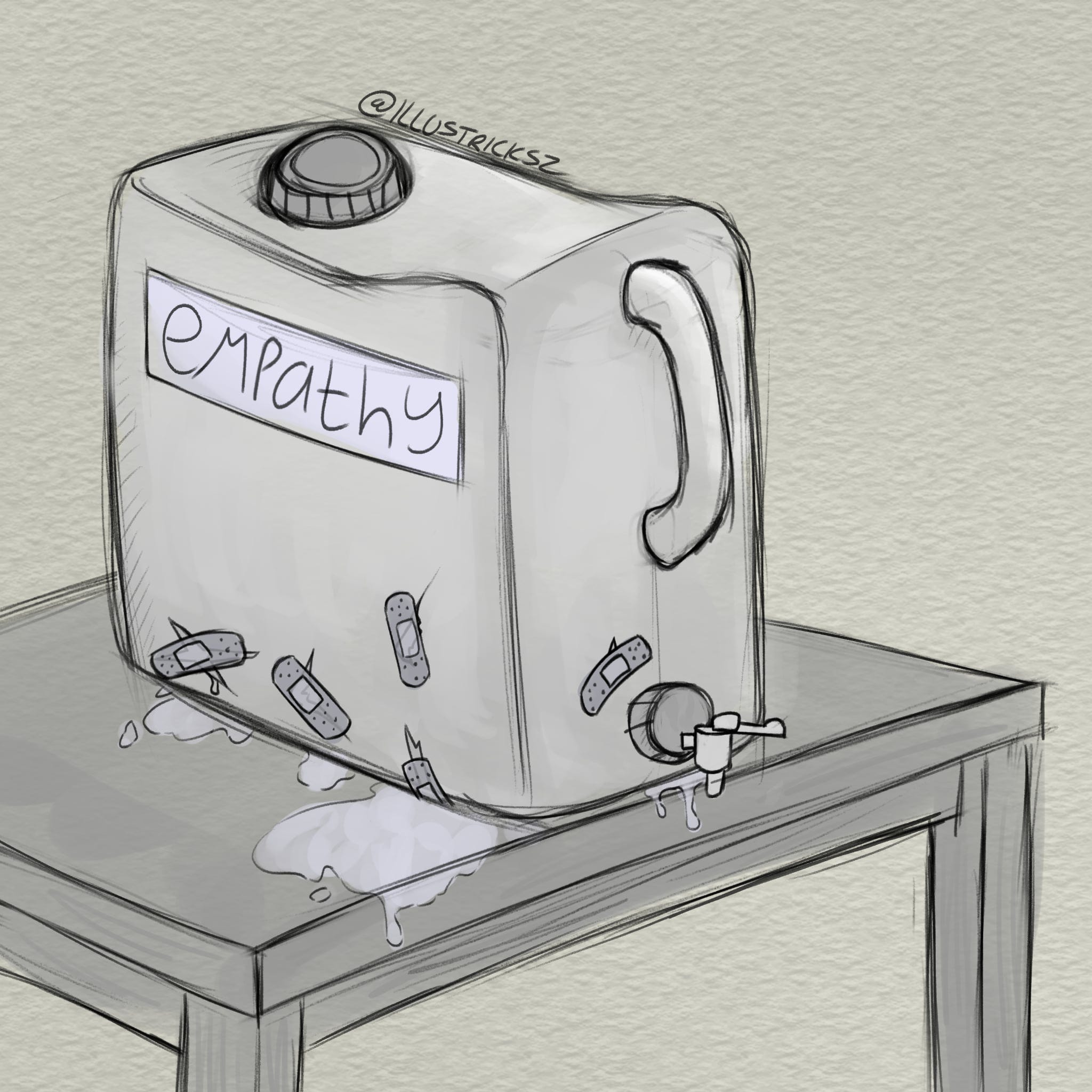
Whether it’s social expectations about who visits who for which holiday, or who brings what food to what meal, who is assumed to be hosting large meals, which side of the family gets Christmas Eve or Christmas Day… it’s almost always better to address expectations early, especially when they are likely to depart from tradition.
If your expectations are different this year, for whatever reason, that’s okay.
But it’s important to manage those expectations with others — they aren’t mind readers.
One way to manage expectations is to simply talk to people. While it may seem easier (or occasionally the better choice) to ‘let it work itself out,’ the old phrase “an ounce of prevention beats a pound of cure” applies here.
Once you identify a potential area of impending conflict, confusion, or unmet expectations, talk about it ahead of time.
Those sometimes-difficult conversations are typically easier when held sooner, rather than later.
Whether you’re on a healing journey, or trying to navigate the holiday season, effectively managing expectations can go a long way toward protecting your peace.
These sometimes-difficult conversations are also easier when you know what you truly want or need — big rocks and boundaries.
In From War to Writing, Chapter 1 and Chapter 2 provide a framework for figuring out your biggest priorities and building protections around them.
If it seems daunting to talk about expectation management, those two chapters should provide a solid footing to make those conversations just a little bit easier.
I feel I left a lot out here, so drop a comment below if you have any questions. :)

WRAP UP
I hope today’s thoughts help you navigate the joys of another busy, fun-filled holiday season.
If you’re on a healing journey, I hope these tools help bring you some extra peace.
To recap today’s big points:
Protecting your peace is always important. On healing journeys and around the holidays, extra vigilance here can pay off with lower stress and better memories.
People Pleasing — Particularly around the holidays, some may expect a level of “people-pleasing” you are unwilling or unable to provide. That’s okay… and may require some expectation management.
Managing Expectations — When big rocks, boundaries, and healing journeys lead to changing expectations, talking about them early can make things easier for everyone.
Again, Happy Holidays from jofty’s Corner!
I hope your holiday season is filled with joy, peace, and good health.
Thank you for being here. I look forward to seeing you next Saturday.
Yours From War to Writing,
- Terry 8^)
People-Pleasing | Psychology Today
https://www.psychologytoday.com/us/basics/people-pleasing
This is such a thoughtful piece. So many writers (myself included) feel that tension between showing up for others and protecting the space where our peace and our creativity live.
I especially loved your question: “When does protecting your peace become rude?”
As someone who writes about family, trauma, and truth-telling, I’ve learned that protecting your peace is often the most compassionate choice you can make for everyone involved.
Thank you for naming this so clearly. I’ve been reflecting a lot on how these same practices apply to staying connected to our writing during a season that often pulls us away from ourselves.