
Chapter 3: Seeking Alignment '101' - For Those Who Stopped the Spiral
Clawing back from the brink brings new opportunities to realign. After stopping the spiral and protecting priorities, ground is fertile to Seek Alignment.

I can’t say for certain when I started seeking alignment, but at some point, after I stopped the spiral, I opened my eyes.
The first thing I noticed was my family wasn’t inside my freshly forged battle lines.
That’s when I realized I was out of alignment.
Once I was able to stand on my own two feet and looked around, I was stunned to see how small my world had become.
Seeking alignment is how I addressed this surprise and begin charting a course along my healing journey.
In Chapter 3, I’ll share what I learned while seeking alignment on the road From War to Writing.
“From War to Writing” is a story of hope and healing.
This is my first book and a work in progress. All feedback is welcome.
Prologue: My First Attempt at Solitude
Introduction: Weaving a Tapestry of Healing from Curiosities in the Chaos
Chapter 1: Stop The Spiral - “I Let My Dandelions Grow”
Chapter 2: Protecting Priorities - Boundaries as Battle Lines
Chapter 3: Seeking Alignment ‘101’ - For Those Who Stopped the Spiral
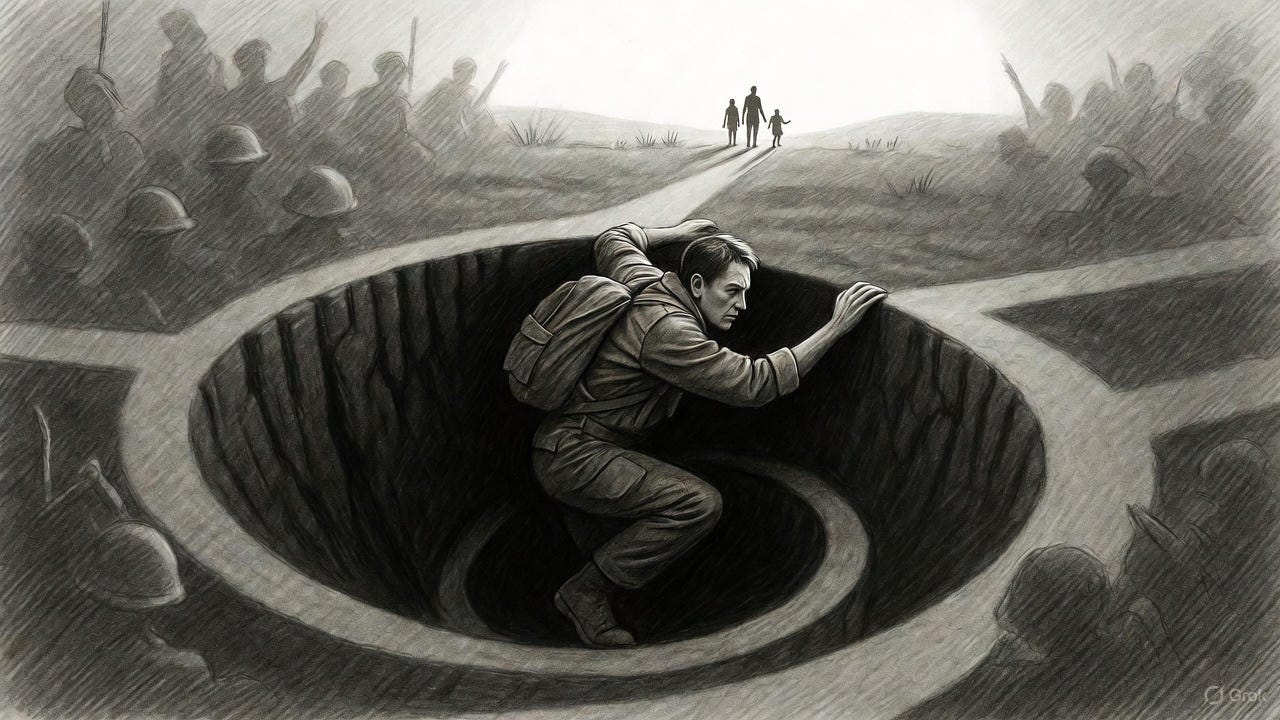
In the first two chapters of this book, we focused primarily inward to stop the spiral and get our footing. We didn’t talk much about how our journey interacts with or impacts the lives of those around us.
Though it can sound like a mostly internal focus, seeking alignment is where the rubber meets the road on our healing journeys.
Once we seek alignment, we begin to emerge from whatever solitude or safety we found to stop the spiral. Until this point, healing has been almost fully inward focused.
This is where we climb out of our foxhole, survey the landscape, and start going where other people are.
NOTE: As we take action to seek alignment, we will impact those around us. It is important to keep this in mind as we discuss alignment to avoid leaving any impression this is a wholly selfish pursuit, or one taken in isolation.
In my writing I’ve broken down ‘seeking alignment’ into three major categories:
Professional - In our professional lives, harmonizing tasks with skillset and vision is the main hallmark of seeking alignment. I addressed this in-depth in Burnout Unraveled Part 4: Recovery. Though our hands are often metaphorically tied in this regard, incremental nudges toward alignment can add up.
Personal - In our personal lives, seeking alignment may look like building a life around authenticity and peace. Managing expectations is a solid way to do that. You can find my best work on that topic in: Managing Holiday Expectations - Protecting Your Peace vs. People Pleasing
Healing - On healing journeys, we’re trying to integrate personal authenticity with environmental harmony to facilitate recovery.
While all three categories are closely interrelated, our focus today is on healing.
In the rest of this chapter, I will answer three questions:
What does “Seeking Alignment” mean?
Why should we “Seek Alignment”?
How do we “Seek Alignment” on healing journeys?

What Does “Seeking Alignment” Mean?
Healing journeys bring battles we don’t choose. Sometimes they also present opportunities we wouldn’t typically experience.
When our world gets turned upside down, “seeking alignment” is one such opportunity.
It can easily sound like some spiritual mumbo-jumbo or something you would go on a silent retreat to discover… but it’s something we can all seek on our own, if we chose.
On the road From War to Writing, we’re talking about rebuilding our lives after stopping the spiral.
In this context:
Seeking Alignment means building your life around who you are rather than crafting who you are around your life.
Alignment is:
Alignment is active. — Alignment means we’re steering, not drifting.
Alignment is deliberate — It may look like refining your taste for which ‘rocks’ to allow inside your ‘battle lines.’
Alignment is action. — As we heal, we can add (or add back) more big rocks.
Alignment is NOT:
“Finding Jesus” - Though spiritual pursuits may be a key part of seeking alignment, that is only part of the equation.
Finding the perfect course, book, lesson, or “guru” — Those are tools, not the final goal.
Doing what “feels right” — Discussions on our ‘moral compass’ aside, seeking alignment is not selfish. It’s not about ‘feeling good’ … it’s about deliberately arranging our priorities and situations so they fit who we are… as best as we can. Even small measures of success make us more available to others and expand (or patch leaks in) our Empathy Tank.
Seeking alignment looks different and requires different approaches depending on the phase or area of our lives we’re trying to align.
Seeking alignment is not a step, or a phase, or even a goal… it’s a moving target, and more of a layer or thread that covers or weaves through our journeys in different ways based on where we are in our lives.
Seeking alignment is also hard work. We might not be in a hurry to add ‘more work’ to our healing journeys… but rebuilding is an opportunity.
Seeking alignment while rebuilding helps us pour stronger foundations and craft a more sustainable framework for the next phase of our journey.
Note on “Hustle Culture” — On the road From War to Writing, “Seeking Alignment” means learning to discern what thought patterns aren’t inherently healthy, or our own. When I realized I needed to work outside the “hustle culture” mindset of “just try harder, push through, work longer hours” it was a big first step toward alignment. That led to the real work of figuring out what alignment would look like in the new phase of my life without “hustle culture” driving most of my thoughts, actions, and expectations.
(Hat-tip to Benjamin Antoine for his enlightening thoughts on “Hustle Culture.” If this term piques your interest, check out his Substack for useful tips and resources to tackle that mindset.)
When we craft our life around who we are, it can be easy to think that means crafting our life around what we want. Going down that road can lead to becoming overbearing, controlling, or boorish. There is important nuance here.
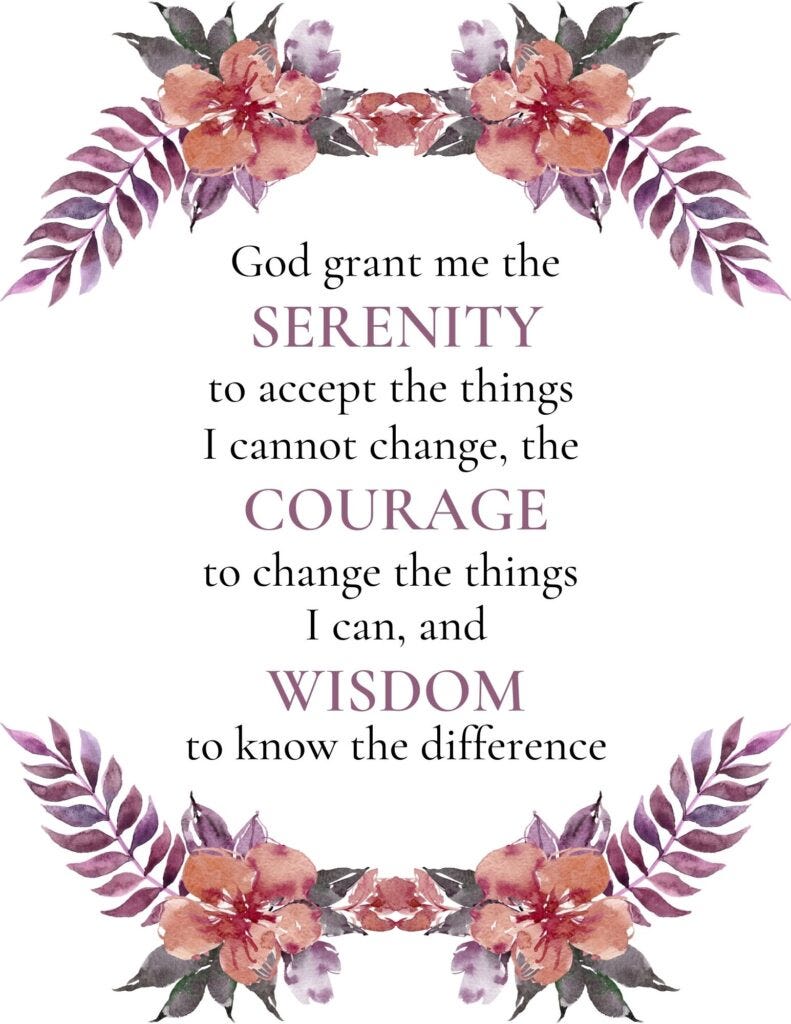
The serenity prayer1 talks about accepting things we can’t change, seeking strength to change what we can, and having wisdom to discern the difference.
Seeking alignment encapsulates all three concepts.
That is seeking alignment.

Why Should We “Seek Alignment”
At the end of the day, better alignment makes it easier to sustain a positive trajectory on healing journeys.
If setting boundaries is like setting battle lines to hold ground, seeking alignment is like prepping the battlefield to expand beyond those established footings.
Once I stopped the spiral and set my battle lines, I opened my eyes and realized I had alienated everyone close to me - my wife, my kids… even my cat.
I realized I had placed them all outside my battle lines.
Those relationships looked like “glass balls.” I could have unknowingly shattered them without the love, support, and patience of my family. At a minimum, those relationships were “big rocks” that needed to be protected.
Some of the boundaries I set to stop the spiral — as necessary and useful as those battle lines were — needed to be adjusted to (re)include my family.
That required seeking alignment.
Stopping the spiral was a struggle for survival. For a while, hiding from the world may have been necessary, perhaps even “aligned.” However, hiding in survival mode it is not aligned with who I am or want to be.
As I dug deeper into seeking alignment, I realized a few key things:
Over my 24 year military career, I outsourced most of my alignment to the US Air Force. I aligned almost every facet of my life to keep my job and do it to the best of my ability.
Aligning my life to suit my career was like carefully building a scaffolding. That structure was vast, and I didn’t realize how much of my life rested on the goal of simply ‘doing my job.’
When the intricate scaffolding suddenly collapsed, I needed to realign and build a new framework. It was time to figure it out how to seek alignment on my own… like I should have a long time ago.
On the road From War to Writing, main reasons to seek alignment include, but are not limited to:
to increase effectiveness of healing journeys
to ensure we’re including the priorities (and people) most important to us
to build our lives on a sustainable framework fostering continued growth and healing.

How Do We “Seek Alignment” on Healing Journeys
We seek alignment by recognizing (then respecting) our limits.
We seek alignment with less people-pleasing, less feeling responsible for the emotions of others, and more recognizing our own needs.
On healing journeys, seeking alignment often means examining why we do things.
Take the American Thanksgiving tradition, for example. In my family, that usually involves cooking a very large meal for lots of people.
This year, as I was seeking alignment, protecting my peace was on the menu.
The ‘why’ was basically tradition, and a one-year deviation for alignment seemed warranted. My entire family agreed. (Expectations were managed.)
So, rather than make a big deal of the holiday, we kept the gathering to just our immediate family. We planned a meal focused on minimizing stress rather than observing every tradition. We found a mix that felt like our holiday and kept the stress and drama to almost zero.
That was one clear, concrete way I recently sought (and found) alignment.
Another way to figure out how to seek alignment is to consider concrete steps to get there. Being an aircrew guy, I made a checklist. :)
Checklist for Seeking Alignment
Assess — deliberately consider what you can align
Identify Options for Alignment - possibly:
Routines - some “normal” routines may be flexible
Responsibilities - modify, delegate, or re-frame for meaning
Boundaries / Battle Lines - some of these can shift as needed
Make Incremental Change — change something within your control. Aim for slow, intentional, incremental change.
Incorporate Feedback — as we pivot outward and (re)connect with others, feedback can increase our ability to “dial-in” how we seek alignment.
Use Clarity Moments — in moments of peace, paths to alignment can be easier to recognize. These moments take us back to “assess” and the checklist starts again.
Listen to (and trust) your Central Nervous System (CNS)
Another thing to consider when seeking alignment is the role our Central Nervous Systems2 play along our healing journeys.
Our central nervous systems carry trauma memories.3 They remember things we don’t always intellectually understand or recall clearly. As we seek alignment, we may begin to notice things more clearly that just don’t feel ‘right.’
If something feels out of alignment, don’t force it.4 If it’s a task, there’s probably a reason why it’s so hard and you’re probably not being ‘lazy.’ We need to give ourselves some grace, especially on healing journeys.
Ignoring my CNS in the name of “duty” and “responsibility” brought me to the road From War to Writing.
Learning to listen to it is helping me navigate the journey.
Personal Examples of Seeking Alignment
When I stopped the spiral, protected my priorities, and set battle lines, my world got really small.
To survive, it had to.
But when I started moving forward on my healing journey and seeking alignment, I reevaluated those priorities and battles lines — based on who I was and what I wanted, rather than only absolute survival necessities.
Some examples of me “seeking alignment” on the road From War to Writing:
Doing dishes again — In the depth of my fight, I abandoned almost all household chores. Leaving my family to do all the housework did not align with my long-term goals… so I sought alignment by stepping up and helping again.
Moving back in with my family — while I never physically left, I lived in our basement during the deepest season of my struggle. I was about as mentally detached from them as one could be. Seeking alignment meant reintegrating with my family once I was ready to do so.
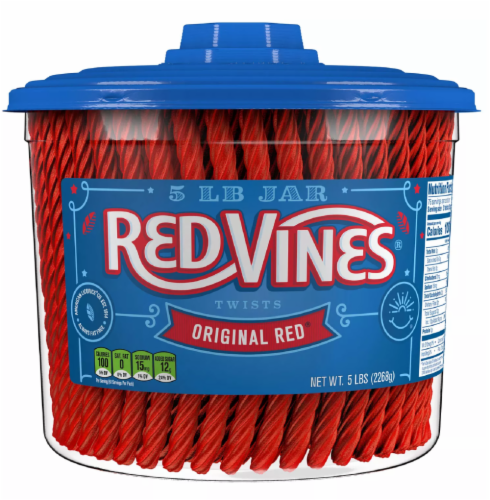
Dropping Red Vines as a staple of my diet — I like them, a lot … and those buckets of 80’s-vibe Red #40 goodness helped me through some hard times… but the likely impact on my health didn’t align with my goal to be at least somewhat healthy. Weaning myself off of them was an act of seeking alignment, and success was a sign that healing was underway.
Bottom line, no matter how you seek alignment, remember one key thing:
Incremental change is key. We’re seeking progress, not perfection.

Wrap
Seeking alignment is a broad term that covers at least three different areas:
Professional Life
Personal Life
Healing Journeys
On the road From War to Writing, seeking alignment is active, deliberate action, designed to make it easier to maintain a positive trajectory on healing journeys.
We strive for that goal by recognizing (then respecting) our limits and thinking about why we do things.
Along the way we learn to listen to our Central Nervous System and remember to give ourselves a little grace.
Once we figure out the what, why, and how, the real work begins.
Seeking Alignment means building your life around who you are rather than crafting who you are around your life.
Bottom line: Seeking alignment isn’t magic, but it helps.
I hope this chapter helps you navigate the road ahead! If you have any questions or would like to share your thoughts, please leave a comment below, send me a DM on Substack, or simply reply to this email.
Until next Saturday, I wish you a pleasant week, and happy holidays!
Yours, From War to Writing,
- Terry 8^)
ps. the next couple weeks will be different. I’m not sure exactly what that means yet, but the next two missives are unlikely to be 2,500 words of “deep thought.” :)